
Your roof doesn’t just protect your home from the outside – it also has to breathe.
That’s where ventilation comes in.
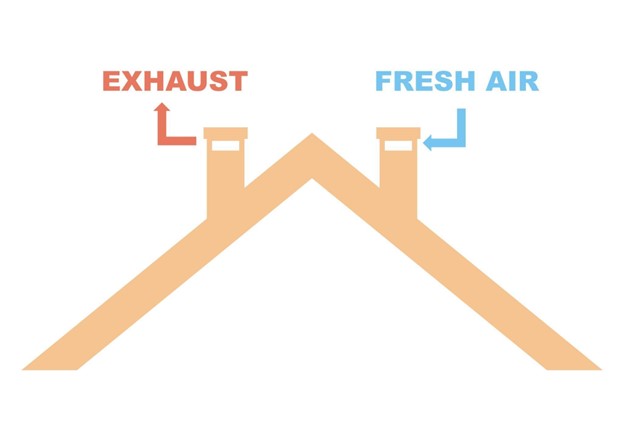
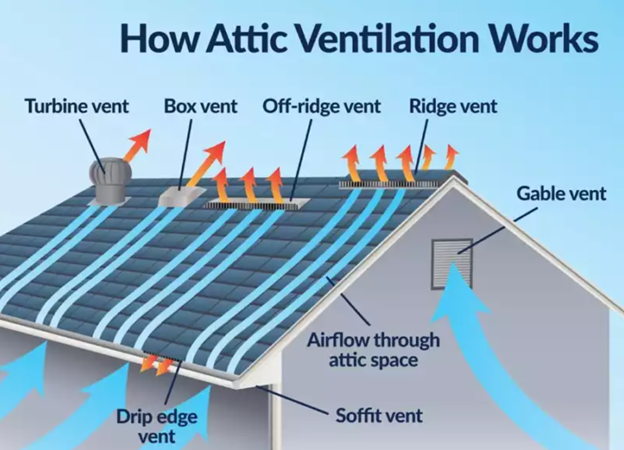
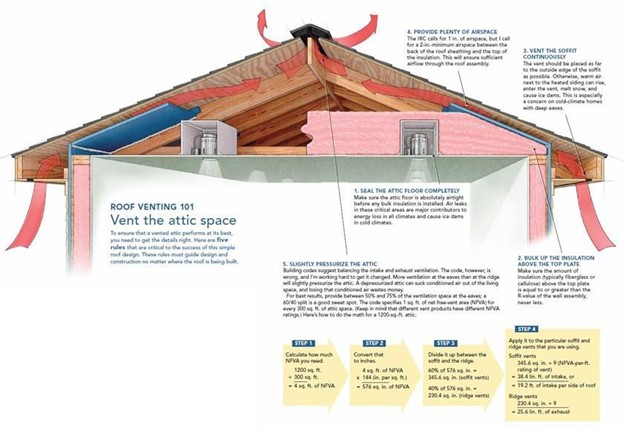
A properly ventilated roof system uses intake vents (usually at the soffits or eaves) to pull cool, fresh air into the attic, and exhaust vents (like ridge vents or roof vents) to release hot, moist air out the top.
As air moves continuously from bottom to top, it helps regulate temperature and moisture inside your attic. This protects the roof deck, shingles, insulation, and even the structure of your home.
Without proper ventilation, heat and moisture get trapped. That can lead to shortened shingle life, warped decking, mold growth, higher energy bills, and ice dams in winter.
When ventilation works together with the rest of the roof system – underlayment, flashing, ice and water shield – it ensures your roof lasts longer, performs better, and protects your home year-round.
Ventilation isn’t optional – it’s a critical part of a healthy roof system.


