
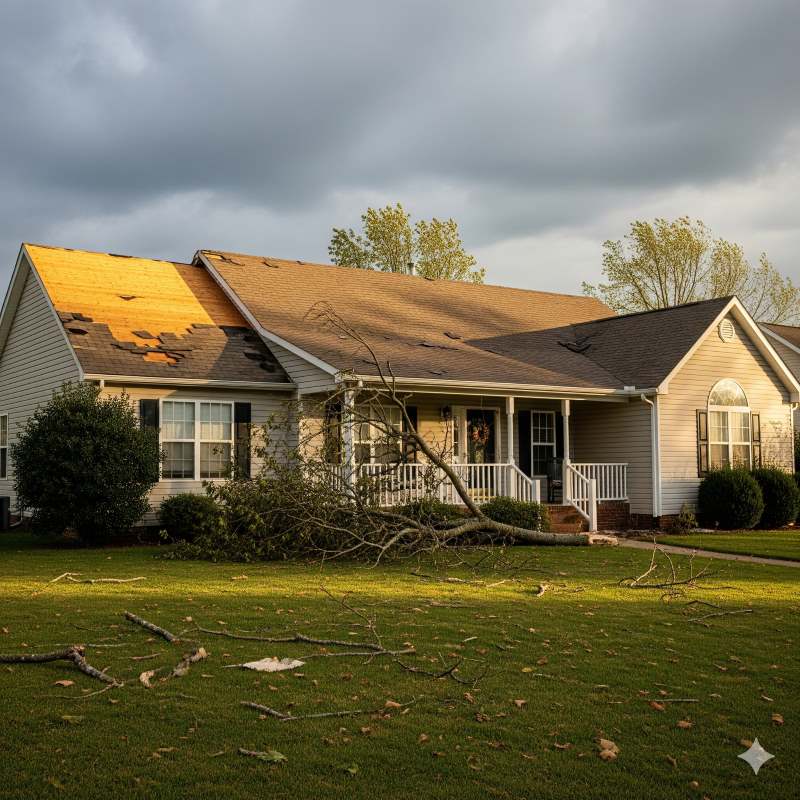
A major storm just hit your area. Your roof took a beating, and now you’re faced with a big question: Do you call your insurance company or claim specialist/roofer first? It’s a common dilemma with a clear answer. By following a few key steps, you can protect your home and ensure a smooth repair process.
Step 1: Prioritize Safety and Document Damage
- Stay Safe: Do not get on your roof yourself, especially if it’s wet or if there’s significant damage. Use binoculars to look for damage from the ground.
- Document Everything: Take clear photos and videos of all visible damage, both inside and outside. This includes missing shingles, hail dents, or leaks in your attic or on your ceiling. This documentation is crucial for your insurance claim.
- Prevent Further Damage: If it’s safe, take temporary steps to prevent more damage, like placing a tarp over a hole or a bucket under a leak. Keep receipts for any materials you buy—your insurance may cover these costs.
Step 2: Contact a Reputable Contractor for an Inspection
After a storm, getting a professional assessment from a claim specialist/roofer first can be very beneficial.
- Determine if a Claim is Necessary: A professional can help you decide if the damage is significant enough to file a claim. If the repair cost is less than your deductible, filing a claim may not be worth it, as it could still go on your record.
- Strengthen Your Claim: A qualified professional can provide a detailed, objective report of the damage, identifying issues that an insurance adjuster might miss (like “bruised” shingles or underlying damage). This report is a valuable tool when you file your claim and meet with the insurance adjuster.
Step 3: File Your Insurance Claim
- Report the Loss: Once you have an assessment, contact your insurance company to report the damage.
- Provide Documentation: Submit your photos, videos, and the claim specialist/roofer report to your insurance company.
- Meet the Adjuster: Your insurance company will send an adjuster to evaluate the damage. It is highly recommended to have your claim specialist/roofer present during this meeting. They can point out all the damage they found and make sure nothing is overlooked.
Step 4: Proceed with Repairs
- Review the Estimate: Compare the insurance company’s estimate with your contractor’s assessment. If there are discrepancies, your contractor can help you negotiate with the insurance company.
- Choose Your Roofer: You have the right to choose your own roofing contractor. Pick a reputable, local company that is licensed and insured and has a good track record with insurance claims.
Important Considerations
- Emergency Repairs: If you have severe damage that poses an immediate risk to your home, such as a major hole in the roof, call a roofer or an emergency service right away. Most insurance policies require you to mitigate damage to prevent it from getting worse.
- “Storm Chasers”: Be wary of companies that travel from one storm-damaged area to the next, often leaving as soon as the work is done. This makes it impossible to hold them accountable if issues with the repairs arise later on.
- Door-to-Door Sales: We know that sometimes a personal visit is the best way to let people know we’re in the area and ready to help. However, be cautious of salespeople who pressure you into signing a contract immediately. A reputable company will give you the time and space to make an informed decision.
Your Deductible: Remember, you are responsible for paying your deductible. Be wary of any company that offers to waive or “eat” your deductible. This is considered insurance fraud and is a major red flag.


